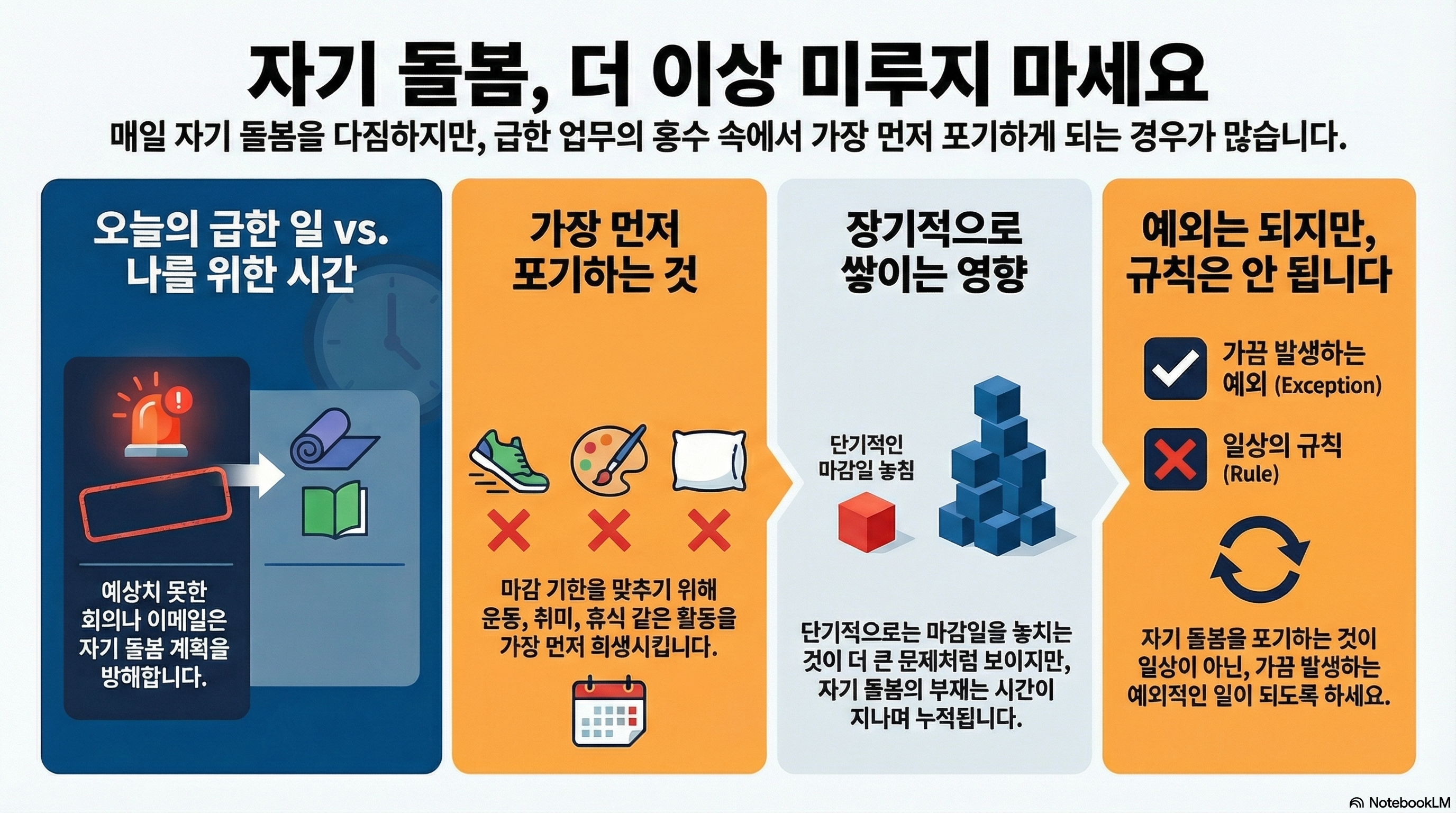
[2026학년도 수능영어 35번] There are few of us who don’t at least want to make time for self-care activities such as exercise, hobbies, or relaxation. We start each day with the best of intentions but then get stuck by the flood of email messages or pulled into an unexpected meeting. As we struggle to reprioritize so we can get everything done before our deadlines, often our self-care activities are the first thing to be given up. No matter how much we plan, we all occasionally have days when that happens. In the short term, the impact of missing that grant deadline may be greater than the impact of missing a woodworking class. But it’s important to recognize the cumulative impact of not prioritizing self-care and to make sure that in the long term, this is the exception rather than the norm.
📌 핵심 주제
일상의 압박 속에서 소홀히 하기 쉬운 자기 관리의 장기적인 중요성을 강조한다.
🔄 논리 구조
자기 관리의 필요성과 현실적인 어려움 제시(1-2) -> 자기 관리 포기의 일반화(3-4) -> 단기적 중요성과 장기적 중요성 대조(5) -> 장기적 관점에서 자기 관리 우선순위의 중요성 강조(6)
📝 문장별 상세 분석
1There are few of us who don’t at least want to make time for self-care activities such as exercise, hobbies, or relaxation.
운동, 취미 또는 휴식과 같은 자기 관리 활동을 위해 시간을 내고 싶어 하지 않는 사람은 우리 중 거의 없다.
💡 핵심 의미:우리 대부분은 자기 관리 활동을 위한 시간을 내고 싶어 한다.
🔍 구문 분석:
There are few of us who don’t at least want to make time for self-care activities→ 'few of us who don’t ~'는 이중 부정을 통해 '거의 모든 우리가 ~하고 싶어 한다'는 긍정적인 의미를 강조하는 구문이다. 'who'는 주격 관계대명사로 'us'를 선행사로 받는다.
📘 어휘:few(거의 없는), at least(적어도), self-care activities(자기 관리 활동), exercise(운동), hobbies(취미), relaxation(휴식)
2We start each day with the best of intentions but then get stuck by the flood of email messages or pulled into an unexpected meeting.
우리는 매일을 최선의 의도로 시작하지만, 이메일 메시지의 홍수에 갇히거나 예상치 못한 회의에 끌려들어 간다.
💡 핵심 의미:매일 자기 관리를 위한 좋은 의도로 시작하나, 예기치 않은 일들로 방해받는다.
🔍 구문 분석:
get stuck by the flood of email messages or pulled into an unexpected meeting→ 'get + 과거분사'는 수동태의 의미를 가지며, 'stuck'과 'pulled'가 병렬 구조로 연결되어 주어 'We'가 겪는 상황을 묘사한다.
3As we struggle to reprioritize so we can get everything done before our deadlines, often our self-care activities are the first thing to be given up.
마감일 전에 모든 것을 끝내기 위해 우선순위를 재조정하려고 애쓰면서, 종종 자기 관리 활동이 가장 먼저 포기되는 것이 된다.
💡 핵심 의미:마감일 때문에 우선순위를 재조정하는 과정에서 자기 관리가 제일 먼저 희생된다.
🔍 구문 분석:
As we struggle to reprioritize so we can get everything done before our deadlines→ 'As'는 '~하면서'라는 시간의 부사절을 이끌며, 'so that S V' (~하기 위해서) 구문에서 'that'이 생략된 형태로 목적을 나타낸다. 'get everything done'은 'get + 목적어 + 과거분사' 구문으로, 목적어(everything)가 동사(done)되도록 하다의 의미다.
the first thing to be given up→ 'to be given up'은 'the first thing'을 수식하는 형용사적 용법의 to부정사 구문으로, 수동의 의미를 가진다.
📘 어휘:struggle(애쓰다, 분투하다), reprioritize(우선순위를 재조정하다), deadline(마감일), given up(포기되다)
4No matter how much we plan, we all occasionally have days when that happens.
우리가 아무리 많이 계획하더라도, 우리 모두는 가끔 그런 일이 발생하는 날들을 겪는다.
💡 핵심 의미:아무리 계획을 잘 세워도 자기 관리를 포기해야 하는 날은 발생한다.
🔍 구문 분석:
No matter how much we plan→ 'No matter how'는 '아무리 ~하더라도'라는 양보의 부사절을 이끄는 복합 관계부사 구문이다.
days when that happens→ 'when'은 선행사 'days'를 수식하는 관계부사다. 'that'은 앞 문장의 내용, 즉 자기 관리 활동이 포기되는 상황을 지칭한다.
6But it’s important to recognize the cumulative impact of not prioritizing self-care and to make sure that in the long term, this is the exception rather than the norm.
그러나 자기 관리를 우선시하지 않는 것의 누적된 영향을 인식하고, 장기적으로 이것이 표준이 아닌 예외가 되도록 하는 것이 중요하다.
💡 핵심 의미:자기 관리를 소홀히 하는 것의 누적된 영향을 인지하고, 장기적으로 자기 관리가 예외가 아닌 표준이 되게 해야 한다.
🔍 구문 분석:
it’s important to recognize... and to make sure...→ 'it'은 가주어이고 'to recognize'와 'to make sure'가 진주어로 병렬 연결되어 있다.
the cumulative impact of not prioritizing self-care→ 'of + 동명사' 구문으로, 'not prioritizing'이 'impact'의 내용을 구체화하며, 'not'은 동명사를 부정한다.
this is the exception rather than the norm→ 'this'는 앞서 언급된 '자기 관리를 포기하는 상황'을 지칭한다. 'rather than' (~라기보다는) 구문으로 'exception'과 'norm'을 대조한다.
📘 어휘:recognize(인식하다), cumulative(누적된), prioritizing(우선순위를 매기는), self-care(자기 관리), make sure(확실히 하다), long term(장기적으로), exception(예외), rather than(~라기보다는), norm(표준, 일반적인 것)


댓글